Wednesday, 17 October 2012

Compendium of Pub Games - Pt.10

This Northamptonshire Skittles Table takes pride of place in the bar of the Royal Oak in the village of Naseby, Northamptonshire. Cribbage and Darts are also played at the pub, which has a good reputation for its beer.


When you get bored with the fried food & ice cream of Matlock Bath, pop in for a pint at Ashover Brewery pub the Princess Victoria. Real ales are the speciality of this traditionally styled pub, but there's also a splendid hop garlanded Darts Board available for the sociable business of gaming.


The image above shows the pin setting and metal 'foul throw' sheet of an unused Skittle Alley at the Nags Head, Clay Cross in Derbyshire. From what I've been told, this is an all too common sight in the Derby/Notts area these days. The pub is perhaps the pick of the bunch in the village, a proper locals boozer, well run and welcoming. It's sad to see the alley covered in pot plants like this, but at least it still exists in good shape, perhaps ready to be rediscovered by younger skittlers in the future. The Clay Cross & District Skittles League is still quite active, with 28 teams playing in 4 leagues, though no pubs in the village which gives the league its name appear to be playing in the league at present.

A giant fund raising Shut The Box at Bedford CAMRA Beer & Cider Festival

Sunday, 14 October 2012

Some More Cribbage Boards

The Cribbage Board collection I'm definitely not collecting continues to grow! In my defence they do mostly all get used, and like the small collection of Shove Ha'penny Boards which I'm also not collecting, it' nice to have a choice to hand.


I found this old Bakelite and Brass Cribbage Board at a car boot sale recently. It cost little more than the price of a pint. Tarnished and stained from many years of neglect, I felt it was worth rescuing and giving a bit of a polish up. It's interesting that something as basic, functional, and downright common as a cribbage board would be this over-engineered. The precision drilled brass plate has been nicely chamfered to fit the Bakelite base before being firmly fixed with six matching brass screws. Deep machined holes at each end of the main body provide storage for the two sets of neat colour coded Brass Pegs, each hole neatly plugged by its own brass screw-in cap. This is a really posh cribbage board, perhaps made as a one-off project by a skilled craftsman, or maybe crib boards of this quality were once available to buy from upmarket stores, a scoring board for the gamer who had everything.

Cribbage Pegs. Ox Bone to the left, colour-coded plastic to the right. It's not absolutely essential to have proper pegs for a crib board, un-popped rivets and matchsticks do the job just as well, but if you're going to use an attractive old Mahogany board like this one it seems a shame not to embellish it with an equally elegant set of pegs. The board is clearly a homemade one, but has a nicely worked compartment underneath for storing the pegs. The holes on the base would have originally housed a set of brass bun feet.


Cribbage Boards, Dominoes, and Cards at the Green Dragon, Ryhall, Rutland

Wednesday, 10 October 2012

Half Moon, Kempston, Bedfordshire


Table Skittles, of the type most commonly played in Northamptonshire and Leicestershire, is a game which can also be found to a lesser extent in some of the surrounding counties. The northern half of Bedfordshire is one such area, though here as elsewhere the game has declined significantly in more recent years, such that it may well have disappeared entirely from the pubs of Bedford town itself. You'll need to venture out to the suburbs and surrounding villages of Bedford to find a pub or club with a table now, though I'm pleased to say that when a table can be found, leagues play is still very much in evidence.

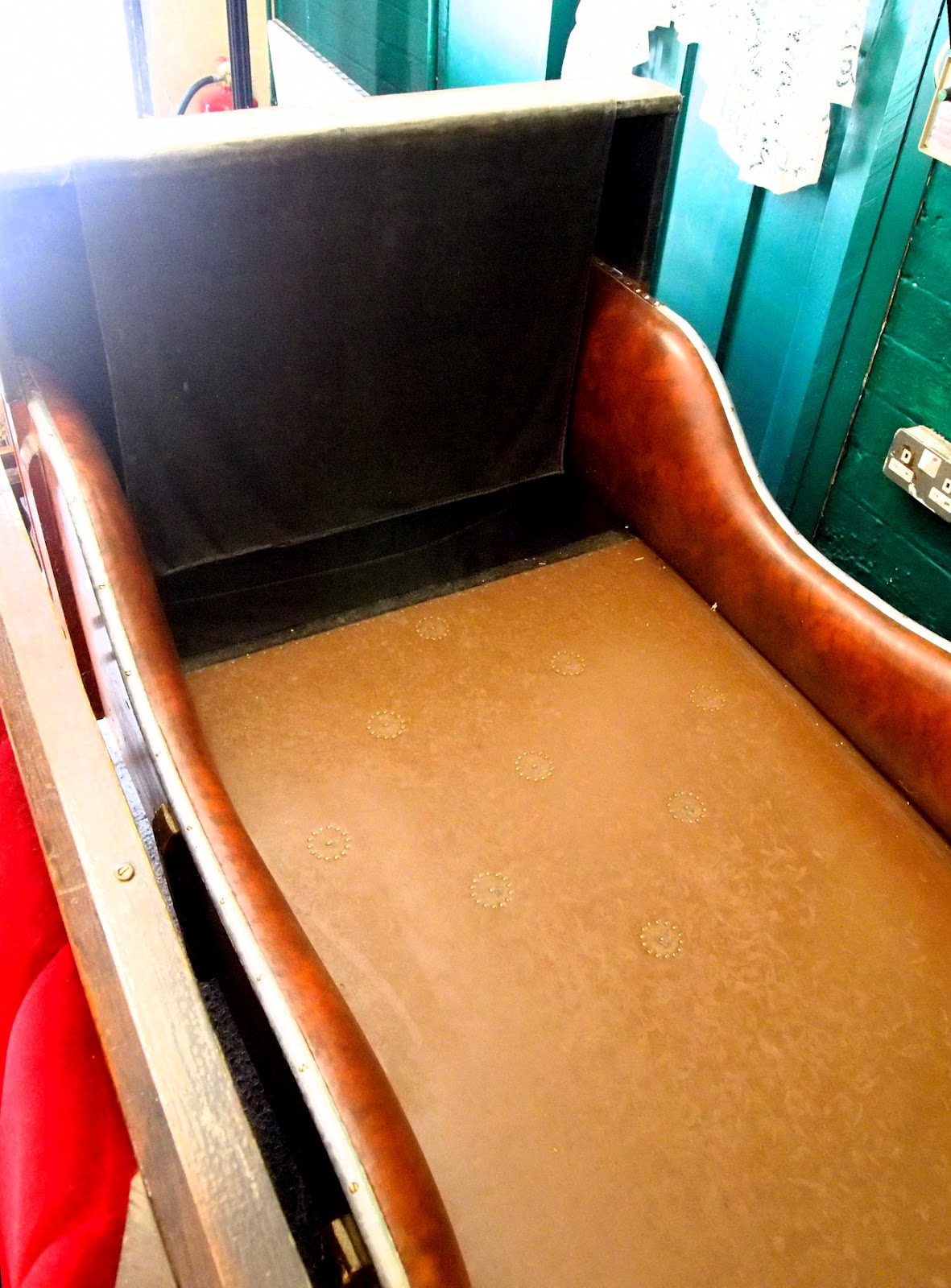
Kempston, a village located on the south-western edge of Bedford, is still a bit of a skittles stronghold. Teams from a number of pubs and clubs in the village play in the North Beds and/or Bedford & District Skittles Leagues, the Half Moon being one of the best examples and well worth a visit. Recently refurbished, the interior is immaculately presented, with a comfortable lounge/dining area, and a separate thoroughly traditional bar. It's the bar which houses the beautifully maintained Skittles Table, upholstered in vibrant reddish leather work, a good contrast to the Boxwood pins and cheeses. Darts, Cribbage, and Dominoes are also played at the pub, and perhaps surprisingly there is also a twin Pétanque (or Boule) piste at the rear which is available for functions during the Summer months.


Sunday, 7 October 2012

Blue Bell, Belmesthorpe, Rutland


It's been a long time since village pubs could rely for their success on beer sales and local drinkers alone. A quality dining experience is all but essential these days particularly if rural pubs want to attract visitors from outside the immediate area. But sadly for those of us who like a pub to be just that, drinkers can sometimes be effectively excluded from a pub in favour of the all pervasive dining experience.

It's often argued that when a struggling pub is reinvented as a successful dining venue, on balance it's a positive thing because at least the pub has been saved from closure. Certainly a closed pub is serving no-ones needs, but where I disagree with this thinking is when a pub has become so singularly focused on the dining experience that it is to all intents a restaurant with bar and not a pub at all. In these cases, a pub has not in fact been saved, but rather a restaurant has been created at the expense of the pub stock. Of course how common this situation has become is largely down to your interpretation of what a pub is. I know there are many people who believe that so long as the bar has a handpump or two on it, ideally dispensing something from a small or local brewery, it's still fulfilling its role as a pub. I believe there's much more to a pub than the beer. What sets a good pub apart from a restaurant is that it should include at least some space conducive to wider social interaction, perhaps even with people outside of your own social clique. Restaurants, and many of the more upmarket dining pubs simply don't encourage this kind of social mingling. They are not pubs in my view.


Which brings me to the Blue Bell pub in Belmesthorpe, a very good example of how to cater for the all important food trade, yet still maintain its essential 'pubiness'. Not only does landlord Aubrey Johnson win awards for the quality of the beer on offer, but he has also made every effort to maintain the pub as the hub of the community. The bar is still a place to drink and chat, and games are still an important part of the mix at this community local.

The league staples of Darts, Cribbage, and Dominoes are played, with other games in the pipeline including a recently acquired Bagatelle, and plans for a Devil Amongst The Tailors. It's not surprising that games play such an important role at the Blue Bell, the landlord previously played Pushpenny in the nearby Stamford league, and still keeps his own board polished and ready at the pub.


Tuesday, 2 October 2012

The Railway, Kibworth, Leicestershire

The Leicestershire village of Kibworth gives its name to one of several Table Skittles Leagues which are still contested in the area, though sadly none of the pubs in Kibworth actually field a team in the league. The Kibworth & District Skittles League is made up of pubs and clubs stretching from it's current heartland of Market Harborough, through to Wigston on the outskirts of Leicester. Kibworth itself is still represented in the league by teams from the local Working Mens Club.

Some of the team now playing at the club originally made their home at The Railway, a welcoming and well run locals pub located in the heart of the village. The skittles table, which appears to be a Leicester model, is still in situ at the pub, though these days it's the Long Alley where it resides which sees more action, being popular for functions and casual games.

In common with most surviving Long Alleys in Leicestershire, the Skittle Alley at The Railway also doubles as a function room, hence the tables seen here in line of fire.
Where a pub plays its skittles in a league, the match-day Pins and Cheeses are not generally available for use in casual games. A second older set will often be available for this function, with the better quality set kept safe behind the bar, often in a box like the one shown here. No home team wants to entertain visitors with a set of excessively chipped and splintered skittles, indeed it's generally accepted that the woodwork must meet a certain standard for a league match to go ahead. Though still stored in their protective box, these pins have certainly seen better days, though still perfectly serviceable for a social match. The licensee is currently looking to acquire a newer set for the pub.
The typically worn barrel-shaped 'Cheeses' of Leicestershire Long Alley Skittles. The darker specimens are probably made from dense and weighty Lignum Vitae, one of only a few woods hard enough to withstand the kind of punishment meted out in this robust game, and survive for any length of time.


Though not all of these are now in regular use, it's rare to find the three types of 'Cheeses' used for Skittles in the Leicestershire area, together in the same pub. In addition to the barrel shaped Long Alley woods, there's also a full set of Boxwood Northamptonshire pins and cheeses, as well as three of the slim hardwood cheeses used in the much rarer Leicester game, though no sign of the matching 'skinny' pins.

Saturday, 29 September 2012

Medbourne & Hallaton, Leicestershire

The villages of Hallaton and Medbourne in Leicestershire are perhaps best known for the annual Bottle Kicking tradition. The game has strong links with the three remaining village pubs, acting as unofficial headquarters to participants, and as the focus of fundraising activities for the event including the many charities it supports. The pubs are also good places to find images and artifacts from previous years of this important local custom. There are other games associated with these village pubs, including one perhaps not usually associated with the pleasures of drinking and pub-going


Flat Green and Crown Green Bowls have a long association with pubs. In addition to the many municipal and private members bowling greens, there would have been quite a few pubs with their own greens at one time. Indeed the number of pubs still bearing the Bowling Green moniker is a good indication of how many of these greens there would have been, though sadly few have survived the demands of more recent development. Some have survived as unusually flat beer gardens (a good example of this can be seen at the Station Hotel in Loughborough, Leicestershire), whilst others would have been sold off for development or tarmacked over to meet for increasing need for car parking space. So pubs which still have associated bowling greens in regular use are now rare indeed. The only one I've visited personally is the Newhampton Inn, a splendid Victorian boozer in suburban Wolverhampton.

The beautifully maintained Bowling Green shown here is located at the front of the former grade II listed Horse & Trumpet pub in the village of Medbourne. When trading as a pub, the Horse & Trumpet was regarded as an unspoilt gem, and listed on CAMRA's Inventory of Historic Pub Interiors. Sadly, since the death of the last licensee several years ago, the pub is now trading as an upmarket restaurant, though a 'vintage' Watneys Red Barrel sign hanging at the corner of the building gives a clue to its former existence. More happily, the bowling green's future has been secured for the future, and is now in the hands of the Parish Council for use by the Medbourne Bowls Club. The markers along the edge indicate the separate 'lanes' used in the 'flat' game.


The Bewicke Arms is an attractive and historic pub, located in an equally attractive village. In common with many village pubs, the Bewicke is largely given over to dining these days, but it's still very much a pub, and one where locals and visitors alike are welcome to simply drink and socialise.

The Bewicke is also a great place to examine images and relics of the local Bottle Kicking tradition, with numerous clippings and photographs decorating the walls from past events. Day-to-day gaming at the pub revolves around the Darts Board located in the smaller of the two bars. The pub team play in the local Welland Valley Darts League, which is a Winter league made up almost exclusively of rural village pubs. The nearby Harborough & District League accommodates the larger villages and town of the Market Harborough area.


Monday, 24 September 2012

Two Skittle Alleys in Loughborough

A surprising taste of West Country Skittles can be found in the Leicestershire town of Loughborough. The Swan in the Rushes was one of the first pubs taken over and thoroughly revitalised by the Tynemill Pub Company (now Castle Rock Brewery of Nottingham), and has maintained a reputation in the town as an excellent traditional ale house ever since.

If there's perhaps one thing lacking from the otherwise excellent traditional interior of the Swan, it's a range of traditional pub games. The current licensee is keen to change this situation, and is on the look out for a decent Shove Ha'penny Board for the pub. Nevertheless, upstairs there is a well appointed function room featuring a short West Country style Skittle Alley. The alley is set with what appear to be nine pins of a style used in the Bristol area. It's a popular game for functions, though unlikely to be the venue for league play given the Swan's distance from the game's West Country home.


Other than the excellent purpose built alley at The Beacon already featured on this blog, I know of only one other traditional Long Alley for Skittles remaining in the centre of Loughborough. There would certainly have been more at one time, and I would be delighted to learn of other surviving examples in the town.

The Peacock Inn is one of the more 'locals' oriented pubs in the town. Located slightly off the beaten track in a residential area, but still close enough to the centre to include in a crawl of the town, and certainly worth the effort. It's a good alley which doesn't appear to be currently in league use. It's perhaps the pubs location slightly out of town which has helped this alley survive where others have fallen victim to fashionable development. Darts is popular at the Peacock, with several boards dotted around the bar.