Monday, 11 July 2016

A Compendium of Pub Games Images - Pt.27

Classic Victorian street-corner locals like the one shown here were once a common sight throughout the Midlands. The industrial decline of the late 20th century has done for a great many of these urban working-mens boozers, yet good examples still survive in one shape or another. Few it has to be said are as beautifully well preserved as the Dewdrop in Ilkeston though, most having had their interior knocked through to a single room, losing most of their former character and heritage in the process.

The Dewdrop today is a warm and welcoming local with a reputation for serving great beer, but also well-worth seeking out for the rare treat of a largely unspoilt multi-room interior featuring many of its original period fittings. Originally named the Middleton Hotel (the old lettering is still visible on the outside), the Dewdrop would have served the nearby rail station (currently closed but scheduled to reopen later this year) and a local populace working in the heavy industry of the area. The pub is similar in style to the nearby Gate Inn at Awsworth, itself a very fine heritage pub with a similar reputation for good beer. Perhaps the most distinctive aspect of both these pubs is the wide Lobby which usually functions as an additional drinking area served from a hatch off the central bar servery (below). Both pubs feature on CAMRA's Heritage Pubs list as having interiors of regional importance.


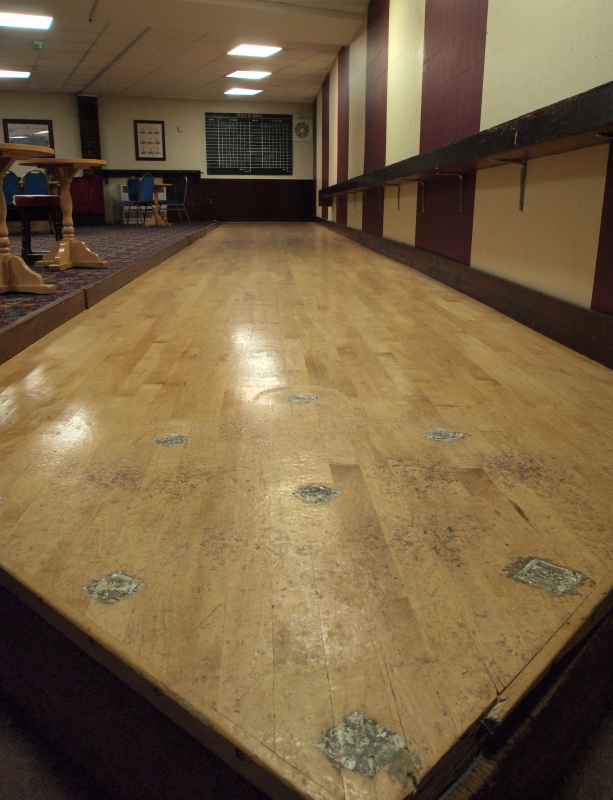
To the right of the lobby is a very cosy Lounge Bar dominated by a roaring fire in the winter months, and a small Snug which now acts as a children's room. To the left is a more basic Public Bar (below), and it's in here that the pubs Pool Table and Dartboard reside. In the yard to the rear of the pub can be found the pubs original outdoor Skittle Alley (left), though sadly no longer in regular use. The licensee informed me that skittles and balls are still kept at the pub, so perhaps a game can be had given a fine day and enough prior notice. Long Alley Skittles is the one truly distinctive regional pub game of Derbyshire (and Nottinghamshire), and the Ilkeston & District Long Alley Skittles League is still active with several venues for the game in the nearby town centre.


CAMRA's inventory of pubs with unspoilt heritage interiors lists 30 or so important survivors within the catchment of Birmingham, including several Victorian and Edwardian classics in the Digbeth area. The Anchor on Bradford Street is one of the very best, and a real feast for the eyes. One of several red brick and terracotta pubs in the area, the Anchor is fitted out internally with wood panelling rather than the elaborate tile work seen in near neighbours such as the Woodman. It also features beautiful Art Nouveau inspired windows, and a rare original glazed screen which divides the public bar into two separate areas.

The pub has a long-standing reputation as one of Birminghams best Ale Houses, and it's a lively, often very busy traditional boozer with a good local following. The public bar features a Pool Table, always in use whenever I've visited, and a Dartboard. The latter squeezed into a corner of the room, and features an unusual folding baffle on the adjacent bench seating (below), presumably designed to protect drinkers from stray arrows during a game.


The rise of the micropub continues apace, with these specialist ale and cider pubs opening at a rate that's proving difficult to keep track of. The way things are going it won't be long before just about every town or large village has at least one micropub to call its own. Welcome relief where local pubs offer little or no choice of beer, but still not a replacement for the very best of our established traditional pubs in my view.

The diminutive size of most micropubs means there's rarely space for games larger than those which are played at a table, and whilst few would regard the opening of another micropub as anything but a positive thing, if they are, as many seem to believe, the very future of pubgoing, games like skittles and even Darts could face an uncertain future.

I hope there's room for both micropubs and the older established 'macro' version. Meanwhile, I'm more than happy to celebrate a return to a more social form of pubgoing, which is undoubtedly where micropubs excel.

Shown above is the recently opened Gas Tap micropub in Melton Mowbray, Leicestershire. A typical single room beerhouse, casks of ale and a small bar servery at one end, a close formation of seating and tables occupying the front which is where we enjoyed a few games of Dominoes over a pint or two recently.


The Bull Baiters micropub had only been open a few days when I visited. So new in fact, that I only came across it by chance on a visit to a few old favourites in the St Johns area of Worcester.

Again, it follows the formula of a smallish single room with the bar servery and casks at one end, comfortable seating arranged to the front. I was pleased to see that the owner has taken the trouble to provide Cards, Dominoes and Cribbage Boards for customers to use, the ideal games for pubs like this.

Considering the many and obvious tourist attractions of Tewkesbury in Gloucestershire, including the impressive Abbey and a wide navigable stretch of the River Severn, most of the pubs in the town are still very much 'locals' pubs. As a tourist in the town myself, this is exactly what I like to see. I see little point in travelling far and wide to drink and dine in the kind of impersonal chain bars and tourist-traps you can find anywhere, and which by and large the locals tend to avoid. If I'm having a pint in Tewkesbury, I prefer to be drinking in the company of at least 'some' local Tewkesbury folk.

So I was delighted to find plenty of locals on a recent trawl around the towns pubs, and particularly pleased that the tradition of afternoon Cribbage play persists in at least one of them. The gentleman playing here meet up for regular Cribbage sessions at the Brittania, and I've found that Cribbage is still very popular in the Tewkesbury and Evesham area.

Saturday, 25 June 2016

Humber Hotel, Coventry

There are currently just two leagues in the UK for the rare game of Bagatelle. The Chester & District Bagatelle League is probably the bigger of the two, and possibly the more healthy with regard to it's future given the highly proactive committee behind it. Other leagues in Wales and Liverpool have folded in recent times, leaving just the Coventry Bagatelle League to make up the numbers. Quite why the game has survived in areas as far apart as the West Midlands and Cheshire is anyones guess, and given the scarcity of Bagatelle tables, which only occasionally come up for sale, it's not a game that's likely to see a revival of fortunes any time soon.

Bagatelle, sometimes known as Old English Bagatelle to help distinguish it from the smaller pin-table game, was once an extremely popular pub, club, and parlour game. As common in its day as the cue sports of Billiards and Snooker in fact. That the game has declined so dramatically, to the point that few will have even heard of it, is a reflection of the ever-changing fashions in pub gaming. It seems likely that the game of Bar Billiards overtook Bagatelle in popularity at some point, and this in turn has been largely superseded in pubs and clubs by the modern import, American Pool.

The game of Bagatelle has many similarities with Bar Billiards. Played from one end of a relatively small table, the goal is to pot balls into a series of cups, each bearing a different scoring number, the highest of which is the central cup which scores 9. There are of course numerous rules and technical details which make Bagatelle the skillful and highly competitive game it is. Played as a singles, doubles, or team game, the aim is usually to score the highest break. In the Coventry League however, teams of five compete, with each match decided by the first to reach a score of 121.

As in most regional pub games, the rules, and often the equipment used vary considerably. Bagatelle tables in the Coventry league are slightly larger than those found in Chester for example. Another obvious difference is the rounded 'baulk' end of the table, though this doesn't seem to have any bearing on play, and Coventry tables have two side-pockets at the scoring end of the table. Another major difference of play is that in the Coventry league, players are obliged to 'nominate' the cup they aim to pot a scoring ball into, which perhaps makes it the more skillful of the two versions currently played.

The Coventry league has shrunk considerably in the last few years. A rule book and fixture list of the mid 90's which was kindly given to me by the licensee of the Humber Inn, lists around 30 venues for the game, with play spread over two leagues of over a dozen teams each. This number is now down to around 7 venues, and all but one of these are social clubs.

The last pub venue for the game in Coventry is the Humber Hotel, located on the edge of the town centre near Gosford Green Park. This area was once the home of Humber Ltd, and was one of Coventry's principal sites for motor vehicle manufacture. The pub would have originally been built as part of the estate housing the factory workers, and is commemorated by an image of a vintage Humber car on the pubs swinging sign.


The Humber Hotel is a classic large-scale Edwardian pub of a type which is still fairly common throughout the West Midlands, the Birmingham area in particular. Shockingly, the pub was destined for demolition at the time current owners Eddie & Lynne Sheridan took it on over 20 years ago. Since then the pub has seen numerous changes, but still retains a good deal of its original period splendour, and even though most of the internal walls have been removed over time, the original multi-room layout can still easily be discerned.

The lounge (above) has been recreated with a modern partition which separates it from the public bar. This glazed screen matches beautifully with the existing wood panelling, so much so that I initially thought it was an original feature. It's in this comfortable room that the pubs Bagatelle Table resides. A vintage Padmore & Sons of Birmingham table, sourced from another venue following catastrophic damage to the Humber's original table. Most aspects of a quality cue-sport table like this can be repaired following damage, but when the table at the Humber was dropped during renovation work at the pub, the all-important slate bed was broken, and the repair considered too costly so another table was procured locally.


A 'Certificate of Conformance' hangs adjacent to the Bagatelle Table (above), and shows that the table at the Humber Hotel has been inspected and complies with the standards of competition set out in the rules. Note also the wooden 'Bell-Push' on the panelling below, one of several dotted around the lounge, and originally used to summon waiter service in the days when the lounge was served from a hatch to the main bar.


On entering the main bar area, it's easy to see the line of the original corridor which would have separated the 'Smoke' on the left-hand side (shown above with Pool Table), and the Public Bar to the right (below). This traditional 'drinking corridor' would have originally been served from a hatch on the left of the main bar counter, and some of the original patterned tile-work is still in situ in this area. In front of the servery is the pubs Dartboard. A large trophy cabinet near the Pool Table attests to the success of the various teams that play out of the Humber.


Saturday, 11 June 2016

Punch Bowl, Worcester


Of all the many pubs that have been lost in recent years, it's perhaps the untimely closure of so many village locals that has been most keenly felt by pub-goers. For the locals it can represent a devastating 'social' loss, particularly where there are no convenient alternatives, but even less regular users and visitors from further afield are likely to mourn the passing of a favourite 'destination' watering hole. Such is the special place we hold in our hearts for that uniquely gregarious institution, the village pub.

By contrast, the epidemic of closures that have afflicted post-war estate pubs seems to have gone largely unnoticed by the wider pub-going populace. For most of us, when we think of our ideal destination for a social pint, it's not likely to be an estate pub that springs to mind, and sometimes with good reason it must be said! It's also true to say that the classic estate pub was not really built to attract a wider custom. Planted squarely in the middle of what were then new housing developments, they would have been perfectly positioned for the locals yet very much out of sight and off the beaten track of passing trade. There would have been more than enough trade on the doorstep anyway, and each pub would have enjoyed a predominantly local and in many cases fiercely loyal following.

I've made a point of visiting just about every kind of pub in the pursuit of our traditional pub games heritage, and this includes numerous late 20th century estate pubs, many of which represent a last refuge for gaming traditions which have been pushed out of the ever-changing town centre drinking circuit. In the course of this investigation I may have been forced to drink Guinness a little too often it's true, but I've also found that by and large, estate pubs can be just as welcoming and well run as the attractive rural village pubs we hold so dear.

The Punch Bowl on Worcester's Ronkswood estate is a good example of this. A quiet midweek afternoon session rarely shows a pub at its best, but it gave me a great opportunity to chat with a few of the locals in the public bar. As a bonus I also got to enjoy a pint of Banks's Mild, and admire the largely intact late 1950's interior, an interior so highly regarded by those that know about these things that the pub is included on CAMRA's list of unspoilt heritage pub.

A surprising addition some might say, but heritage isn't just about historic buildings and relics of a bygone age. It also encompasses important cultural survivors. Pubs like the Punch Bowl are important because they represent a rare connection with a post-war 'near-past', still clearly remembered by many, but fast disappearing from everyday life. Of course the most important aspect of pubs like the Punch Bowl is that they remain open, and continue to serve the local communities they were built for.

A pub like the Punch Bowl won't be to everyones taste it's true, but to my eyes it has a plain, functional beauty that so many post-war boozers have lost to bland and unsympathetic alterations. The pub retains it's original four room layout where most have been knocked through to one large space around a central servery. Even the original off-sales remains, though now pressed into service as office space.

Chatting with the locals gave me a good insight into the pubs current position in the community. Popular and busy at weekends, less so during the week, particularly during the daytime which is my experience of practically every pub in the current climate. Trade is probably not helped at the moment by the ongoing development of a large green space at the front of the pub. These grassy areas were considered essential to the original design of estates like the Ronkswood, but are now just another opportunity to squeeze in a few more houses. Perhaps the new residents will become regulars at the pub.


In common with pretty-much all community locals, the public bar of the Punch Bowl would have been alive with game play in its heyday. League Darts and Pool are still played at the pub, the Dartboard occupying its own alcove off the public bar, but Dominoes and Cribbage are now played on a more casual and occasional basis. Indeed the public bar is furnished throughout with tables designed for games play (left), the shelf below designed to hold pints, leaving the upper deck free for the shuffle and deal of Dominoes and Cards. Sadly the pubs traditional Quoits Board is long gone from its position under the Dartboard, as is the Shove Ha'penny board that once resided on a table in the bar.

To the rear of the pub is a large function room, a common feature of pubs and clubs from this era where entertainment was so important to the working class social scene. Adjacent to the function room is a Skittle Alley, a later addition to the pub which several teams play from in the local Winter League.

Sunday, 29 May 2016

Sawley, Derbyshire

As a reasonably frequent traveller by rail to Derby (the self-styled Capital of Real Ale!), Long Eaton is, more often than not, merely a handy alarm-call for imminent arrival into Derby. Occasionally I do break my journey at Long Eaton though, and whenever I have, I've found some very good pubs with plenty of gaming interest in the town.

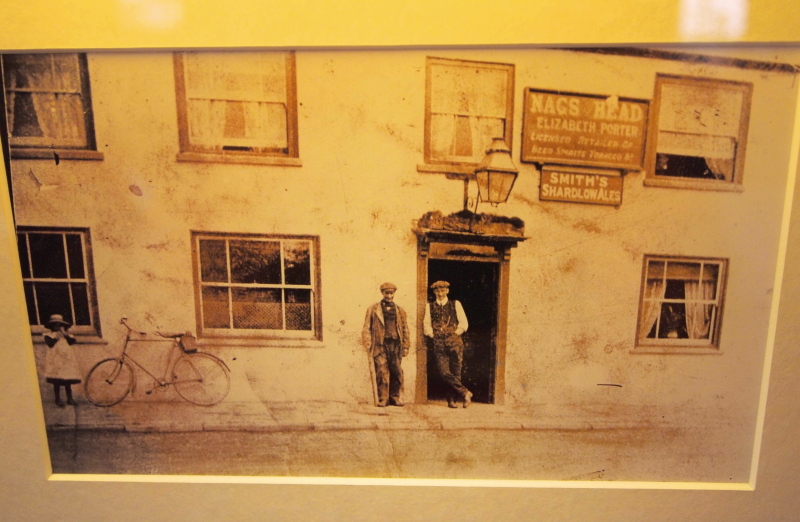
Strictly speaking the station might be better named 'Long Eaton & Sawley', the latter named village being much the smaller of the two, but if anything it's probably closer to the station than the centre of Long Eaton itself. There are well over half a dozen pubs in Sawley, including a few which serve the boating and leisure trade from the nearby marina on the River Trent. Almost side-by-side in the very centre of the village are the Nags Head and White Lion, both of which are attractive destinations, and well worth the short walk from the station if you too decide to alight at Long Eaton.

Nags Head


The Nags Head is a classic two-room village locals pub with a very good reputation for beer (note the 'Pride in Pedigree' certificate behind the bar). The public bar (left) is the larger of the two rooms, and the social hub of the pub. Warmed in the winter by a wood-burning stove, it's home to a local golf association, and the venue for Darts matches in the Long Eaton & District Darts Association League.

The pub is also home to a team in the Long Eaton & District Long Alley Skittles League, a hardy bunch by all accounts given that their home alley is located outdoors, as indeed a great many still are in the Notts and Derby area. It was raining persistently when I visited, conditions that players must be well used to given that rain doesn't usually stop play in the Notts/Derby version of Long Alley Skittles. Many of these alleys are now being covered over or relocated indoors, but it would be difficult to cover the Nags Head alley given its current position in the middle of the pubs car park!


The Bell

The Bell Inn is the closest of Sawleys pubs to the rail station. Presumably a fairly traditional multi-room pub at one time, the Bell has been smartly modernised and opened out to one large room with a number of distinctive areas. This includes one for Pool and Darts, both of which are played in local leagues. Note the beautiful old Bass in Bottle mirror adjacent to the Darts throw.


In a small garden to the side of the pub, and overlooked by housing on most sides, can be found the pubs original Skittle Alley. The scoreboard, floodlight, and tin sheet for determining a foul throw are all still in situ, though the structure which would have originally caught balls and pins behind the frame has been removed. Whilst Darts, Dominoes, and Pool are all played at the Bell, sadly the alley has not seen a match for several years.


White Lion

The principal attraction of the White Lion to many pub-goers is likely to be the brewery which operates from the pub. The Old Sawley Brewing Company was established in 2013, with brewing on a small plant located within the pub itself, but a new brewery is now up and running in premises to the rear of the pub. So beer is obviously a very important part of the White Lion's offering, but it would be wrong to assume that was the only attraction. This is another traditional and attractive two-room village local, delivering everything a local should. Bar Billiards and a Shove Ha'penny are available, as is a good outdoor Skittle Alley.


Adjacent to the brewery building is the pubs Skittle Alley, which was out of action when I first visited a few years ago pending construction of the brew house. I'm pleased to say that with the brewery now completed, the alley has been tidied up nicely with a set of skittles and balls available for play.


Thursday, 12 May 2016

Tewkesbury, Gloucestershire

The White Bear, Tewkesbury
Tewkesbury and myself go back a long way. The town was often the base-camp for early exploratory cider trips and cycling holidays in Gloucestershire and the Vale of Evesham, and on one occasion provided a memorable stopover on a boozy River Severn boating trip. Needless to say, I'm not exactly a stranger to the numerous pubs in the town, most of which I'm pleased to say are still open and trading today.

One of my more regular haunts in the town was the Kings Head Inn on Barton Street, for no other reason than the basic front bar was one of only two regular outlets in the town for a traditional cider of sorts. Sadly the Kings Head closed permanently several years ago, but the other main cider outlet has gone from strength to strength, albeit interrupted on occasion by the severe flooding which afflicts the area.

Another pub that I remember well from my earliest visits to Tewkesbury is the Olde Black Bear, probably the towns most famous and recognisable pub. A historic warren of dark timbers and wood panelling overlooking the Severn, with enough original and unspoilt features to make it onto CAMRA's inventory of heritage pub interiors. This was the pub that we settled into on that memorable boating trip back in the late 80's, but for my money it's the nearby White Bear that's probably the best pub in town now, and not just because of the impressive range of beers and ciders on offer.

The White Bear, pictured in 2006, just a year before the devastating floods which put the pub at the centre of national news reports. The pub has suffered similar flood damage more recently, the interior now fully restored awaiting the next deluge. The original sign has been replaced with the one shown below, reflecting the pubs support for Polar Bear conservation. There are plans to hang the old sign outside the pubs skittle alley. 
The White Bear is located at the far end of the towns busy High Street, tucked away round a slight bend in the old Bredon Road and feeling more like a traditional village pub than a town centre boozer. It's a solid traditional locals pub, but one that attracts a steady stream of visitors from the nearby marina making for a very friendly mix at the bar. Noted as one of the best pubs in the area for beer and cider, it's also very games oriented.

On entering the single L-shaped bar, the pubs Pool Table dominates the right-hand space, and I can't recall a time that I've walked into the White Lion when it hasn't been in use by the locals. At the other end of the bar are two Dartboards, league play at the White Bear being in the Tewkesbury & District Darts League.

Across the yard is Tewkesburys last remaining pub Skittle Alley, protected from flood damage thanks to its location on the upper floor of a large outhouse. The alley is currently home to two teams in the Tewkesbury & District Skittles League, the colourfully named Unreliables and Rousers. The Tewkesbury league, like so many in this neck of the woods, is predominantly a clubs league now, though other alleys certainly existed at pubs in the town as recently as the late 90's. This makes the skittle alley at the White Bear something of a rarity now.


The busy High Street in Tewkesbury is the most heavily populated with pubs, some of which needless to say have been heavily modernised in recent times. Thankfully there are still a few which retain much of their historic charm. The Berkeley Arms is one such pub, a traditional local in the town, as well as an attractive venue for the many tourists and visitors to Tewkesbury. Indeed the pub is almost overlooked by Tewkesburys most popular and well-known tourist attraction, the impressive Abbey.

A truly historic half-timbered building, the front bar and smaller lounge are linked by a narrow corridor running down the side of the pub. It's been a Wadsworth Brewery house for as long as I've been coming to the town, and run along pretty traditional lines.

The licensee has brought a number of traditional pub games with him to the pub, including a Shove Ha'penny (coins available behind the bar), and an intriguing old copper-spiked Quoits Board. The rubber quoits which accompany the board are the older style convex type which more closely resemble the steel versions they were originally modelled on.

The local game of Quoits would have been a common game in this area at one time, as indeed it was in nearby Evesham and throughout much of Gloucestershire. Sadly the game has all-but disappeared throughout much of its former heartland, with the nearest league play in the Forest of Dean and Hereford. The board at the Berkeley is currently buried deep within a store room, but it's hoped that it will be dug out and installed in the bar in the near future.

The highest or 'perfect' scoring hand in Cribbage is 29. Rarely achieved by even the most persistent players, some may never score a 29 hand so you won't find too many of these hanging in a pub or club to record the event. The Berkeley has a selection of games on the windowsill of the front bar (below), including Dominoes, and a couple of 'Long' or tournament cribbage boards. Cribbage is still popular in Tewkesbury and the surrounding area, with play on Monday evenings in the town.

Sunday, 1 May 2016

Crown Inn, Woolhope, Herefordshire

As a frequent visitor to Herefordshire and the wider Three Counties area since the early 1980's, I've often found it something of a disappointment that in a county so strongly associated with the traditions of cidermaking, so few of the pubs offer much in the way of high quality local cider and perry. The ciders from Westons of Much Marcle, the county's major regional producer, have always been relatively common, but the smaller producers of high quality traditional cider and perry, of which there are now many, have often been hard to find outside of a handful of rural pubs and farmshops.

I'm pleased to say that things have improved a little in recent years, with several pubs in the county specialising in ciders from the Three Counties, and many more offering at least something from one or more of the smaller local producers. The Crown Inn at Woolhope has been a notable exception in this regard for several years now. In fact the Crown specialises in Herefordshire ciders and perries as well as the best local beers and fabulous locally sourced food. There can't be too many pubs which offer a separate cider and perry menu alongside the food and wine, an entirely local selection that even includes their own home-pressed 'Kings' cider and perry. It's for this reason that I was more than happy to return to the Crown for an excellent Sunday lunch recently.

Even if cider isn't to your taste, a diversion down the narrow winding roads to Woolhope and the attractive whitewashed Crown Inn is highly recommended, particularly in the summer when the garden, overlooked by St George's church, really comes into its own. Watch out for the local wildlife though, I very nearly had my lunch stolen by a particularly cheeky Blackbird the first time I visited the pub. Yes, even the birds love it at the Crown Inn.


The attention to detail at the Crown Inn extends to a luxury heated and covered smoking shelter at the rear of the pub (below). This space also houses the pubs Table Football, a Dartboard, and Herefordshire's local pub game Quoits. The Crown's Quoits board is a fairly typical concrete example, the standard for boards in the nearby Hereford city league. Painted in the traditional red and green and seated on a steel frame, netted to catch stray Quoits. The table is brought inside and positioned at the Darts oche for more serious play, but a set of Quoits are available from the bar for casual summertime games.